


Welcome to The Pond Journal #5, the first one of this exciting year ahead. Thank you for reading me for another year!
The year at The Value Pond started strong, with a full thesis on a small and unknown company where I believe many powerful macro trends are about to catalyze. We took a deep dive into Foraco (TSX:FAR), a mineral drilling services company.

But in today’s article, we are going back to our roots. We return to Bayer, one of the most challenging theses I’ve faced as an analyst and one from which I have learned the most. And I continue to do so.
It has been just under a year since the last full update of the Bayer thesis. At that time, market pessimism was still widespread, but the first signs of a reversal were beginning to emerge.

Since then, the company seems to have lived up to what I said at the time: “it could also be a pivotal year.” The shares have achieved a 100% upside in one year, with the pharma division delivering positive results both in clinical trials and in the market, signaling that the portfolio could return to growth territory. We can say the turnaround is becoming a reality.
However, in my view, the Crop Science division holds the most unlocked potential. A significant part of this is due to molecular breeding—a fascinating process that builds a moat around accumulated knowledge and genetic data.
My sister who, besides being the best is incredibly sharp, works as a Plant Breeder at a top-tier agricultural firm. I admit I didn't fully grasp what that entailed until this past Christmas, when she told me about her work.
Essentially, she is responsible for developing a viable variety to mass-produce seeds for a specific plant. It is a process of astounding complexity and meticulousness, involving very long development timelines and extremely high costs in both specialized personnel and laboratory equipment.
Time + Money + Trial and error = Moat
In 1798, Thomas Malthus established a theory on the collapse of humanity, positing that population would grow geometrically while food production would only increase arithmetically, limited by available land. This “Maltushian trap” principle was dismantled by numerous agricultural innovations, such as machinery and, in this case, crop species improvements that multiplied productivity per hectare.
The fruits and vegetables in supermarkets haven’t lost their flavor because your grandfather no longer grows them on a small plot while playing Mozart for them; they’ve lost it because, genetically, farmers have prioritized mass production and commercialization traits like shelf-life, homogeneity, and appearance. However, flavor, water consumption, drought resistance, or pest resistance as well as the specific time of year or region of the world where they are planted are also variables that can be modified and are considered in today’s and tomorrow’s agriculture.
This process, which in the past was basically based on trial and error, is still carried out through this same method, only now bolstered and improved by techniques such as genome sequencing.
Imagine Bayer aims to develop a new tomato variety for the pesticide-conscious consumer who refuses to compromise on flavor. Crucially, this seed must also thrive specifically in the greenhouses of southern Spain.
This kicks off a process of sample cultivation, screening, and crossing where, eventually, varieties are sent to a laboratory to detect the genes responsible for desirable or undesirable traits, allowing them to be blended or isolated in the next crop. Viable varieties are tested in farmers’ fields, sometimes with farmers receiving a payment per square meter to conduct these trials. Through trial and error, discarding and selecting, and receiving feedback from labs and farmers, a commercially viable seed is reached.
This process can last more than six years when aiming to commercialize a completely new variety from scratch; furthermore, it requires potential adaptations to different climates or even planting seasons, if the crop allows for multiple harvests in a single year.
This complexity, involving the crossing of billions of genetic data points, creates a "natural patent", a fortress of accumulated knowledge that competitors cannot breach with capital alone.And this is exactly where the acquisition of Monsanto made sense.
Monsanto, there was a reason
In 2018, Bayer acquired Monsanto in what may have been one of the worst M&A deals in history. With the acquisition, the century-old German company faced (and continues to face) hundreds of thousands of lawsuits over the Roundup herbicide.
The cost of litigation, which currently stands at 14 billion euros and could reach 20 billion, could have destroyed the company. However, they also acquired a fundamental piece of the world’s food supply; they became a leader in this incredibly complex industry.
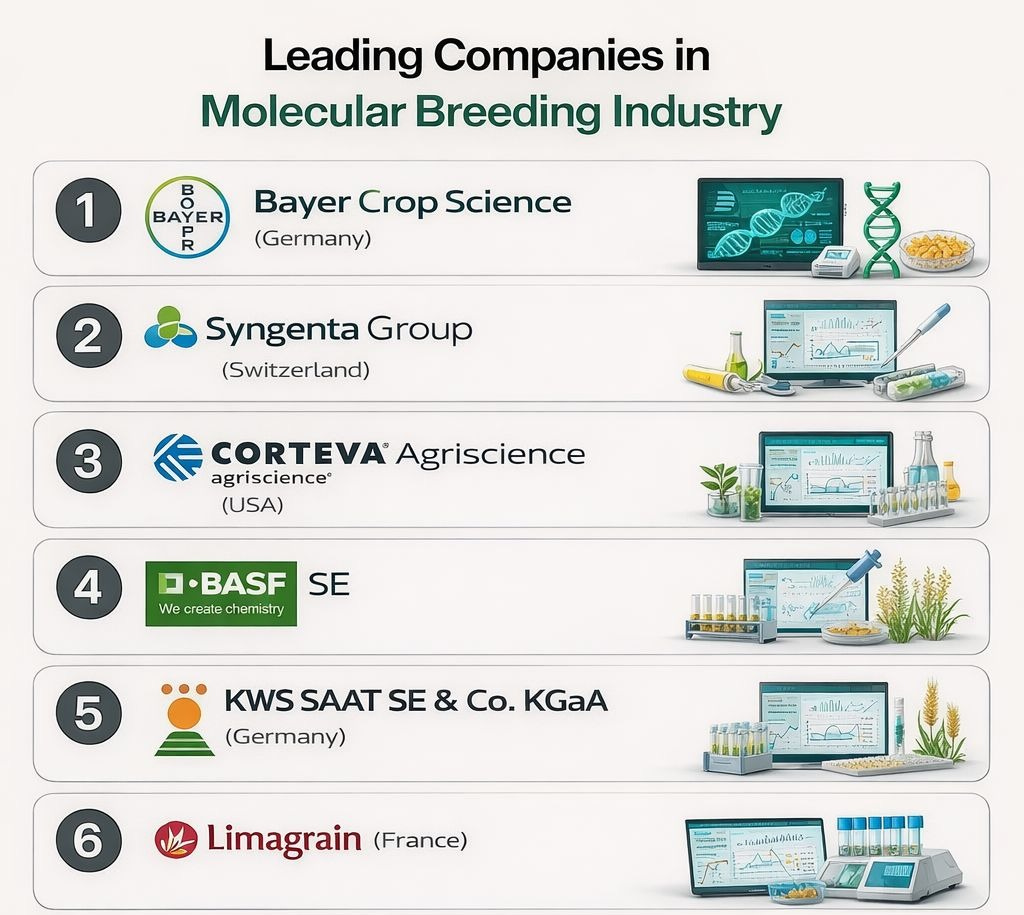
The development of seeds adapted to shifting demand patterns, the need for land productivity, drought and pest resistance, and adaptability to specific ecosystems will be a key driver in the global food system and Bayer’s positioning is a clear advantage.
Scale allows Bayer to double the R&D budget of its two main competitors, granting the company a formidable technological foundation and a strategic position in the most critical crops for global food security.
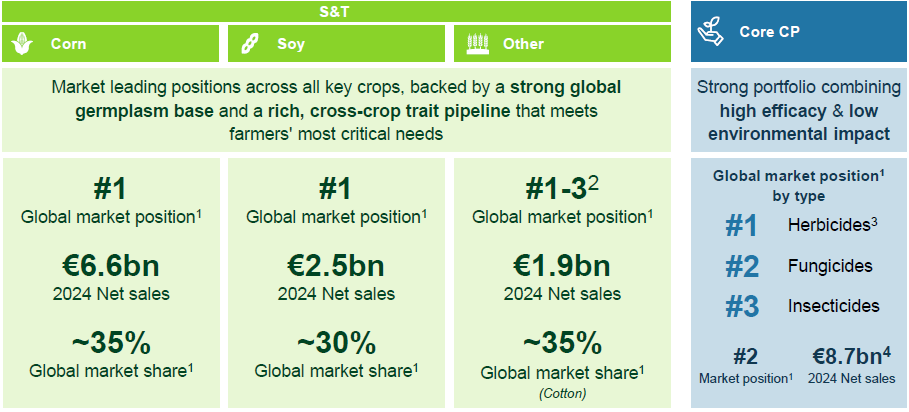
Seeds account for approximately 50% of Crop Science sales, representing 20% of Bayer’s total revenue. This is a significant weight in a sector with a clear growth vector and a moat built around billions of genetic data points.
For pre-Monsanto shareholders, the merger was undeniably a value destroyer. However, in investing, price is everything. With a long-term horizon and the current valuation, Bayer now presents a compelling opportunity.
Thanks for reading the Pond Journal🦆. If you enjoyed it, don’t forget to leave a like 👍subscribe🖊️ and share🔄 it.
DISCLAIMER: All the information provided in this document is purely informative and does not constitute a buying recommendation (according to Spanish Law Article 63 of Law 24/1988, of July 28, on the Stock Market Regulator, and Article 5.1 of Royal Decree 217/2008, of February 15). DuckPond Value Research is not responsible for the use of this information. Before investing in a real account, it is necessary to have the appropriate training or delegate the task to a duly authorized professional.
Reach us on duckpond@duckpondvr.com
I like the way you broke this down. It’s easy to get caught up in bullish narratives and miss the discipline side of it — taking setup, defining risk, and being intentional about whether you actually need to be in a position.
I explore that same idea at After the Close — focusing on process, patience, and letting the market confirm before you act. If you ever feel like comparing notes on the process side of trading, I’d be glad to hear your thoughts. No obligation, just discussion.